
Holding History Curriculum
 Bring primary sources to life with nine classroom-ready lessons.
 Museum-quality replicas students can examine, discuss, and interpret.
 Everything teachers need to build historical thinking with minimal preparation.
 9 monthly history lessons spanning 1692–1955, delivered in chronological order.
 Rated 4.9 by 800+ Reviews

Primary Source Replicas Your Students Can Hold
Help students think like historians through museum-quality replicas of the documents that shaped American history and the National Council for History Education's History's Habits of Mind. Students examine document replicas connected to major topics in American history, including the Salem Witch Trials, the Founding Era, westward expansion, women’s suffrage, the World Wars, and the Civil Rights Movement.
Nine classroom-ready lessons featuring replica documents, ready-to-teach activities, and digital resources. Everything you need to bring inquiry-based history to life.
Turn Students into Historians
History feels more real when students can hold it in their hands.
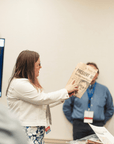
When students examine a replica of Thomas Jefferson's handwritten ice cream recipe, the Louisiana Purchase treaty, or Rosa Parks’ police report, they’re no longer simply learning about history. They're thinking like historians.
Each unit centers on a museum-quality replica of an authentic historical document, giving students the opportunity to analyze evidence, ask questions, and make interpretations. This hands-on approach transforms history from something students memorize into something they discover.
Ready-to-Teach Primary Source Lessons
Teaching with primary sources shouldn’t require hours of preparation. Every unit includes everything you need for a meaningful classroom lesson:
- A museum-quality replica of a primary source document
- A student-friendly transcript with vocabulary support
- Historical background reading that builds context
- Inquiry and discussion questions that encourage deeper thinking
- Ready-to-use classroom activities
- A teacher answer key with sample responses and teaching notes
- Digital versions of every resource for projection or printing
Designed to fit into a single class period with minimal preparation.
Flexible Enough for Every Classroom
Physical + Digital
Receive beautifully printed replica documents for hands-on learning, plus digital versions you can project, print, and share with every student.
Teach It Your Way
Teach the lessons in order, select the topics that fit your pacing guide, or incorporate individual lessons into your existing curriculum.
Standards-Aligned
Flexible enough to meet your state’s education and skills and standards.
Inquiry at the Center
Rather than memorizing facts, students evaluate evidence, consider multiple perspectives, and develop the historical thinking skills used by historians.
Developed in Partnership with the National Council for History Education
The National Council for History Education (NCHE) is a nonprofit organization dedicated to advancing history education and supporting the professionals who teach it. Through professional development, community, and advocacy, NCHE helps educators bring the past to life in classrooms across the country.
This curriculum is built around NCHE's History's Habits of Mind—a framework that develops the historical thinking skills students need to move beyond memorizing facts and toward understanding the past through evidence, context, and inquiry.
Each lesson is intentionally paired with one of these Habits of Mind:
- Past Shapes the Present – Connect historical events to the world students live in today.
- Historical Empathy - Perceive past events and issues as they might have been experienced by the people of the time, with historical empathy rather than present-mindedness.
- Critical Reading – Analyze historical documents closely, using evidence to support conclusions.
- Interrogating Sources – Evaluate evidence, identify bias, and determine credibility.
- Evolving Narrative - Recognize that history is an evolving narrative constructed from available sources, cogent inferences, and changing interpretations.
- Diversity of Cultures – Explore how different cultures, beliefs, and experiences shape history.
- Understanding Impact – Examine how historical events create lasting consequences.
- Decisions and Choices – Consider the difficult decisions people faced and the consequences that followed.
-
Complex World – Recognize that historical events rarely have simple causes or solutions.
- Patient Reflection – Reflect thoughtfully before forming conclusions, recognizing that historical understanding develops over time.
Together, these Habits of Mind help students build the curiosity, analytical skills, and historical perspective they'll use long after the lesson ends.
For just $99, you'll receive:
- Nine complete classroom-ready lessons
- Museum-quality replica historical documents
- Digital downloads of every resource
- Student activities and discussion materials
- Teacher answer keys
- Standards-aligned instruction grounded in historical inquiry
“This was a gift for my history teacher grandson. Out of curiosity, I have it sent to me and then I send it to him. We were both hooked from the beginning. About the 3rd mailing he said, "The best gift ever!" We discuss every mailing.”
“Worth the money. Initially purchased this as a gift for my father-in-law and now, I also got myself a subscription.”

7+
Years in business
7+
Years worth of unique replicas
1 Million+
Letters delivered
100,000+
History buffs delighted.

History's Habits of Mind
Past Shapes the Present
Grasp the significance of the past in shaping the present. Everything that happens in the current moment has roots in the past. We cannot understand the world we live in now without studying the various events and decisions that took place years before. The present is not inevitable — it is built upon an interconnected past.
Historical Empathy
Perceive past events and issues as they might have been experienced by the people of the time, with historical empathy rather than present-mindedness. We all bring our lived experience to the table when we study the past. It’s important to analyze history with the tools and knowledge of our present, but exercise caution when applying our current views to historical people’s experiences.
Critical Reading
Read critically, to discern differences between evidence and assertion and to frame useful and appropriate questions about the past. Assertion is a confident and forceful statement that someone believes is true. Evidence is something that shows proof. We need to read primary, secondary, and current sources with a critical eye so we can recognize the differences between the two.
Interrogating Sources
Interrogate texts and artifacts, posing questions about the past that foster informed discussion, reasoned debate and evidence-based interpretation. Nothing from the past should be taken at face value. Texts and artifacts were created by humans, with a particular purpose or perspective. We need to ask questions that help us understand these human motivations and allow us to discuss with an intention to learn.
Evolving Narrative
Recognize that history is an evolving narrative constructed from available sources, cogent inferences, and changing interpretations. History is a study of the past. Our studies shift and adapt with new or newly understood evidence. The narrative of past individuals and events can be interpreted differently, but that narrative always stems from clear, logical connections between available historical sources.
Diversity of Cultures
Appreciate the diversity of cultures and variety of historical contexts, as well as to distinguish elements of our shared humanity. Culture is complex. The cultures we grow up in impact the ways we experience events, and the same is true for historical people. We can learn about our culture and others’, now and in the past, while also acknowledging our common human experiences.
Understanding Impact
Understand the impact made by individuals, groups, and institutions at local, national, and global levels, both in effecting change and in ensuring continuity. The impact of actions can be short-term, long-term, narrow, far- reaching, intended, or unintended. When studying historical and modern impact, it’s important to examine context and remember that nothing in history is inevitable. Impact can be traced back to actions.
Decisions and Choices
Realize that all individuals are decision-makers, but that personal and public choices are often restricted by time, place, and circumstance. The present is built upon decisions made by individuals in the past. These decisions were made with people’s knowledge of their own experiences, the world around them, and an understanding of their power.
Complex World
Negotiate a complex, often uncertain, and ambiguous world, equipped with the appreciation for multiple perspectives. Humans never know what the future holds. We learn about the past with our hindsight but must remember that the uncertainty we feel today was also felt by historical individuals. We approach our complex world with an understanding that our perspective is not the only one.
Patient Reflection
Engage in patient reflection and constant reexamination of the past and present. History is full of nuance and cannot be quickly captured in soundbites or glossed over with incomplete interpretations. We need to take time to carefully read sources, corroborate evidence, and think deeply about what we know and why we know it.
Why History By Mail?
 Physical Copies Every Month via Mail
 Physical Copies Every Month via Mail
These are time capsules, encapsulating the spirit of a bygone era. From handwritten letters to official decrees, each item offers a unique glimpse into the world of the past.
 Ink & Paper Authentic to the Time Period
 Ink & Paper Authentic to the Time Period
Every 4 months, we explore a different theme from various angles using the letters and documents as our guides.
 Made with High Quality Materials
 Made with High Quality Materials
Preserve a piece of history with high-quality replicas that can be framed, displayed, or added to a personal collection.
 Rare Historical Insights & Pieces
 Rare Historical Insights & Pieces
Dive into the rich context behind each document, learning about the people, places, and events that shaped history.
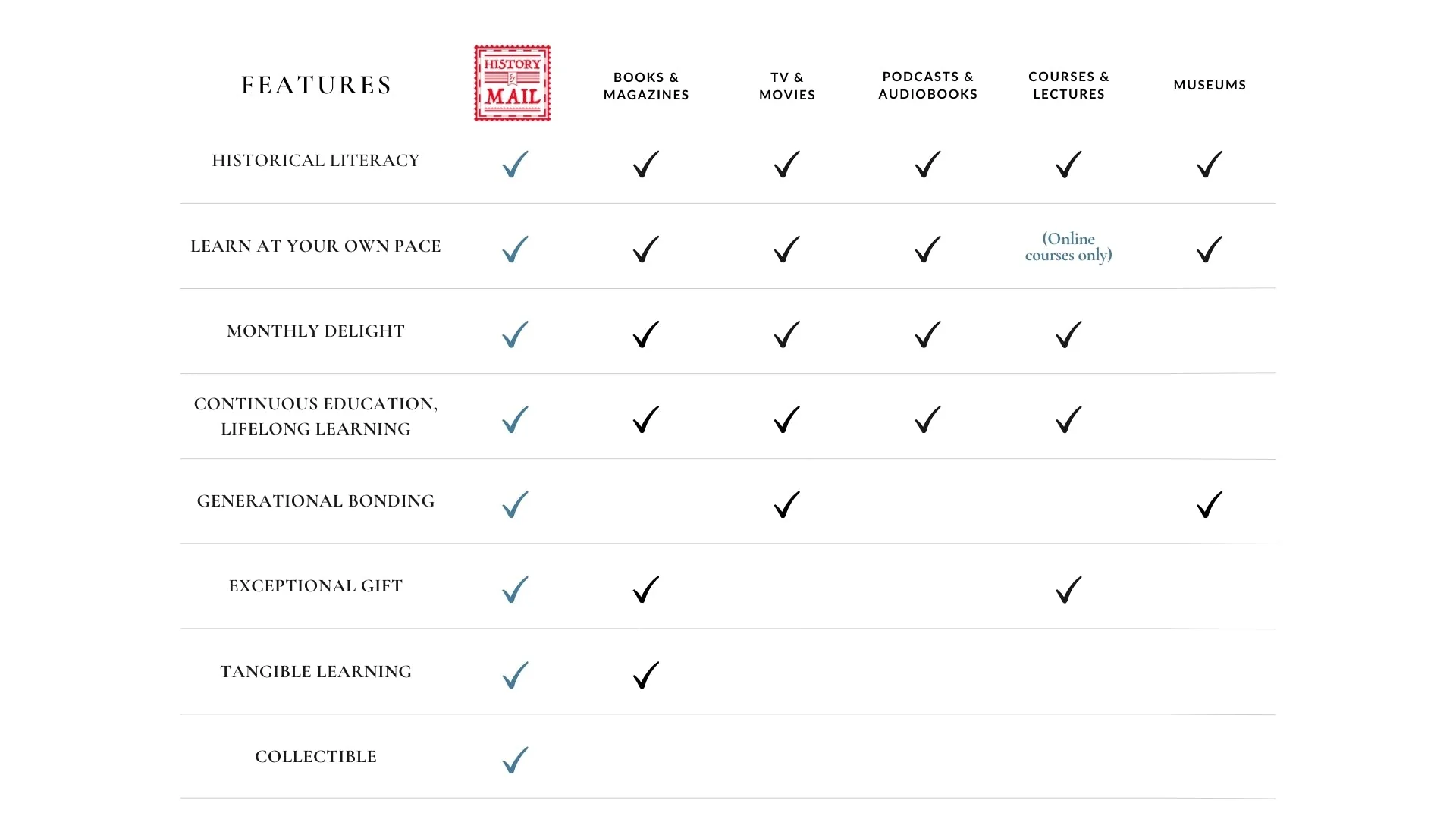
An Unrivaled Learning Experience: The History By Mail Advantage
Discover why History By Mail is the leader in history learning, outshining traditional learning methods.
History By Mail Sample Letter
Curious about what to expect from our subscription? Download a sample letter featuring the Nixon resignation letter—an iconic piece of history.
You May Also Like